
| Prof. Zhigang LiuSouthwest Jiaotong University, China IEEE Fellow, IET Fellow, Professor at Southwest Jiaotong, Guest Professor at Tongji University. He is the Fellow Evaluation Committee for IEEE I&M Society; IEEE TEC AdCom Members; Associate Editor of IEEE TIM (2022-2024), Associate Editor of IEEE TNNLS, IEEE TITS, IEEE TVT, ACTA AUTOMATICA SINICA and Journal of the China Railway Society, IEEE TIM's Outstanding Associate Editors for 2019, 2020, and 2021. His research field is the electrification and automation of rail transit. |
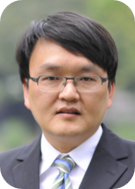
| Prof. Hui HouWuhan University of Technology, China Dr Hui Hou received the B.S. degree from Wuhan University, Wuhan, in 2003, and the Ph.D. degree from the Huazhong University of Science and Technology, Wuhan, in 2009. During 2015-2016, she was a visiting scholar at the University of Sydney. She is currently associate professor and Ph.D supervisor, as well as the Department Head of Electrical Engineering,School of Automation, Wuhan University of Technology. Her research interests include risk assessment of power system, energy internet, electric vehicles, etc. She has been AE or Young professional AE for a number of journals such as PCMP (Protection and Control of Modern Power Systems), Electric Power Construction, etc. She has been nominated as World's Top 2% Scientists by Stanford and Elsevier in 2024. |

| Prof. Bo YangKunming University of Science and Technology, China
|

| Prof. Zugang LiuChina Jiliang University, China Zugang Liu is a distinguished professor and PhD supervisor atChina Jiliang University. With over 40 years of research and professional experience both in China and overseas, he has held senior positions including Principal Scientist at Nanoco (a London Stock Exchange-listed company), Leading Physicist at CDT (a NASDAQ-listed company), and Research Fellow at the University of Oxford. Professor Liu is one of the earliest Chinese researchers dedicated to OLED research. He has been recognized as a Shanghai Rising-Star Scientist, a High-Level Overseas Talent of Zhejiang Province, and an expert at the Zugang Liu Expert Workstation in Yunnan Province. His research integrates fundamental scientific exploration with industrialization-oriented studies, focusing on cutting-edge and applied research in flexible optoelectronics using environmentally friendly materials and low-cost printing technologies. He has published more than 200 academic papers in high-impact domestic and international journals, includingACS Energy Letters,ACS Nano, andAdvanced Science. He also holds over 10 authorized international invention patents and more than 50 Chinese invention patents. |

| Assoc. Prof. Muhammad JunaidChina University of Mining and Technology, China Muhammad Junaid received his Ph.D. (2020), M.S. (2015), and B.Eng. (2011) in Electrical Engineering with specialization in Power system engineering. Since late 2020, he has been serving as an Associate Professor at the School of Electrical Engineering, China University of Mining and Technology, Xuzhou, China. Previously, he was a Research Fellow at King's College Aberdeen, University of Aberdeen, in Scotland, and a Lecturer in Power Engineering at the Department of Electrical Engineering, SARHAD University of Science & Information Technology, in Pakistan. Dr. Junaid's research focuses on alternatives to the SF6 gas and key technologies for fault current interruption, including vacuum interrupters, cryogenic dielectrics, and high voltage insulation. He is a Senior Member of IEEE, a member of the Chinese Society of Electrical Engineering (CSEE), the European Society for Applied Superconductivity (ESAS), and IAENG Hong Kong, and a life member of the Pakistan Engineering Council (PEC). He has been involved in 10 funded projects, presiding over 8 of them, and holds 13 patents and 57 publications. |
